Beyond AdSense: Complete Guide to Mediavine, Ezoic & Affiliate Marketing (2026 Edition)
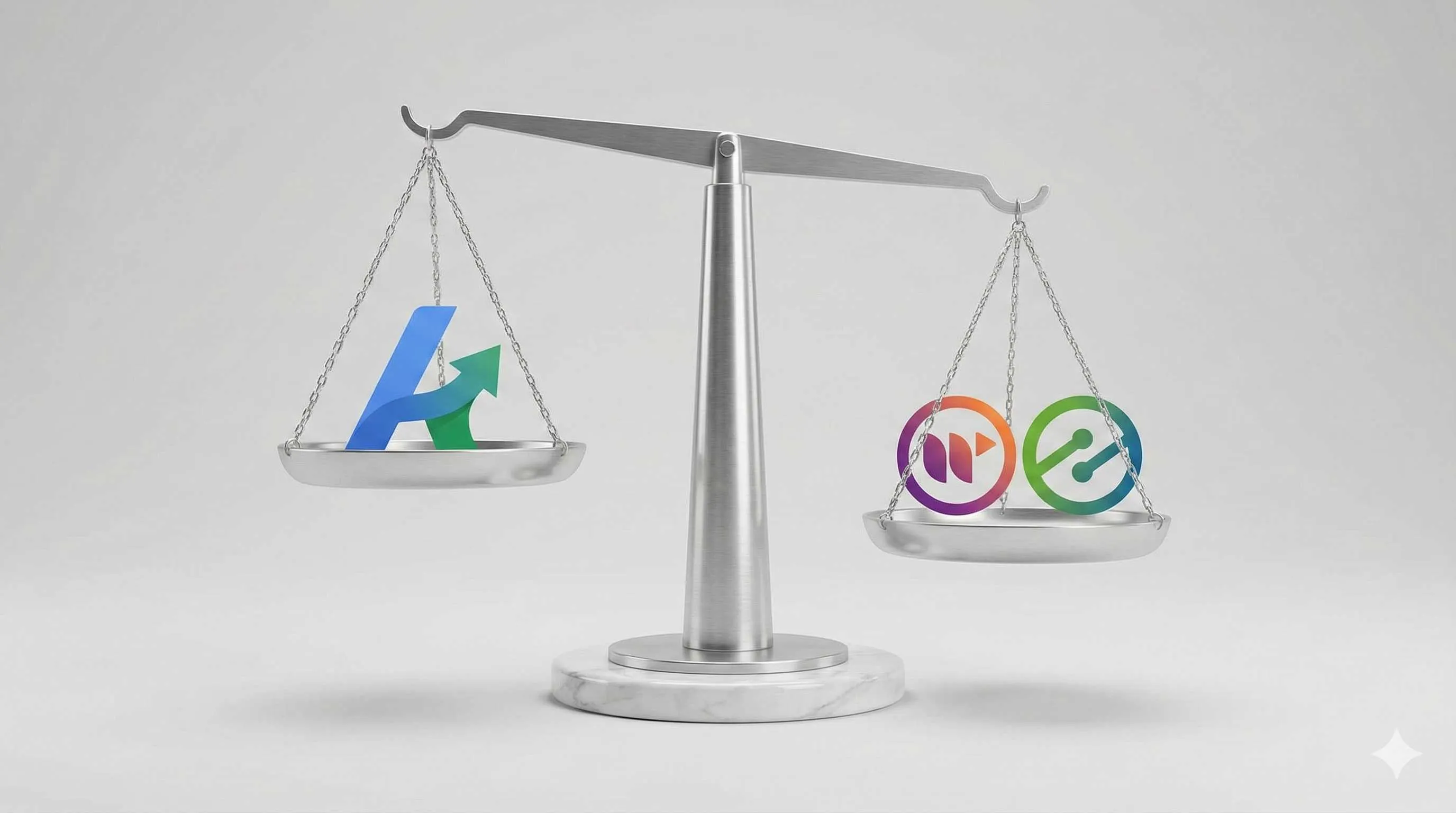
Early this month, I stared at my Analytics dashboard for what felt like forever—traffic was up 40% from last month, yet AdSense revenue had only grown by $12. That’s when it hit me: I’ve been wasting my traffic all along.
Ever felt this way? Your website visits keep climbing, but AdSense ad revenue seems stuck, with RPM refusing to break past $10. Even more unsettling is having all your eggs in the AdSense basket—one account suspension, and your income drops to zero overnight.
Honestly, it took me half a year to find my way out of this rut. Then I discovered that websites earning thousands monthly rarely rely on AdSense alone. They use a “combo punch”: Mediavine as the foundation for high RPM, affiliate marketing to boost performance, and occasional brand sponsorships as the cherry on top. The data doesn’t lie—82% of high-earning websites use multiple monetization methods simultaneously.

This article will compare 5 mainstream AdSense alternatives and complementary strategies, using real revenue data, application thresholds, and practical experience to help you find the optimal monetization mix for your website’s traffic level. Whether you’re at 5,000 or 50,000 monthly visits, you’ll find actionable next steps.
Why Using Only AdSense Wastes Your Traffic
AdSense has a hidden ceiling most people don’t know about.
I ran a test once: as my tech blog grew from 20K to 50K monthly visits, AdSense RPM stayed stuck between $5-$8. This isn’t unique—most websites struggle to push AdSense RPM past $10. Yet with the same traffic, Mediavine can deliver $15-$40+ RPM. What’s the difference? Ad quality and bidding mechanisms.
AdSense has a massive but mixed advertiser pool. Your ad slots often get filled with low-value ads because AdSense’s automatic bidding prioritizes fill rate over unit price. Mediavine and AdThrive work exclusively with premium brand advertisers, whose base rates already exceed AdSense averages.
The single point of failure risk is even scarier. Last year, a blogger running SEO tool reviews had decent traffic and $2,000+ monthly AdSense income. Then one morning, he woke up to an email: account permanently banned for “invalid clicks,” appeal denied. Overnight, income zeroed out, years of work wiped clean.
Here’s the brutal truth: AdSense owes you nothing. Its rules change on a whim, and when you appeal, you might not even reach a human. This risk can only be hedged through diversification.
The data supports this reality. Research on hundreds of high-income content sites reveals that 82% simultaneously use display ads and affiliate marketing. Those earning over $10,000 monthly typically combine 3+ monetization methods. The industry has entered a “combo punch” era—relying solely on AdSense is like walking on one leg.
Ad Network Upgrades: Mediavine vs Ezoic vs AdThrive
If AdSense is website monetization’s “tutorial village,” then Mediavine, Ezoic, and AdThrive are the advanced maps. They share far greater revenue potential than AdSense, differing mainly in entry barriers and operational approaches.
First, the thresholds—your most direct filter:
- Ezoic: No minimum traffic requirement—its biggest advantage. Even 3,000 monthly visits qualifies.
- Mediavine: Standard version requires 50,000 monthly sessions (not pageviews); the new Journey version lowers this to 10,000.
- AdThrive (now called Raptive): Most premium, requiring 100,000+ monthly pageviews with majority traffic from high-value markets like US, UK, Canada.
This threshold design is interesting. Ezoic attracts small sites with zero barriers, then you upgrade to Mediavine or AdThrive as traffic grows—the widely recognized progression path.
RPM comparison is the real core:
I interviewed several bloggers who switched platforms and compiled approximate RPM ranges (data varies by industry and region):
- AdSense: $3-$10
- Ezoic: $3-$18 (average EPMV, earnings per thousand visits)
- Mediavine: $15-$40+
- AdThrive: $20-$50+ (top content possibly higher)
See the gap? With 50K monthly visits, AdSense might give you $300-$500, while Mediavine could deliver $750-$2,000. That’s not pocket change.
Technical features and real-world experience:
Anyone who’s used Ezoic knows its AI testing can be love-hate. Ezoic constantly A/B tests ad placements, sizes, and frequencies to maximize revenue. The upside is squeezing every penny from your traffic; the downside is volatile income—$800 this week, potentially $600 next. One blogger said checking Ezoic’s dashboard first thing every morning dictates their mood for the day.
Mediavine takes a different route: manually curated advertisers, stability above all. Johnny Africa (a travel blogger) shared his Ezoic-to-Mediavine switch—income rose from $2,200 to $3,500 monthly, but more importantly, volatility decreased significantly, making monthly revenue predictable.
AdThrive offers the best user experience among the three. Fast ad loading, no reader-annoying full-screen popups. Their advertisers are all major brands—rarely those “one weird trick” low-quality ads. Of course, the threshold is highest too.
Approval and support:
Application difficulty: AdThrive > Mediavine > Ezoic. Ezoic basically approves anyone with traffic, Mediavine reviews content quality (originality, user experience, violations), and AdThrive examines not only these but also audience quality and engagement.
For customer support, Mediavine and AdThrive provide dedicated contacts with fast responses. Ezoic has a support team too, but with more users, replies may be slower.
If you’re not yet at 10,000 monthly visits, honestly, stick with AdSense and focus energy on content and SEO. At 10,000, try Mediavine Journey or Ezoic. After breaking 50,000, go straight for Mediavine standard. Once you hit 100K monthly pageviews, consider AdThrive.
Affiliate Marketing: Traffic Monetization’s “Hidden Champion”
This is an income source many underestimate. The data will surprise you: in 94% of niches, affiliate marketing revenue exceeds display advertising.
I first realized affiliate marketing’s power seeing a WordPress theme reviewer’s income screenshot—$1,200 monthly from display ads, $4,800 from affiliate commissions. Four times the difference. And their traffic wasn’t huge—just over 30K monthly visits.
Affiliate marketing’s logic is simple: you recommend products, someone buys through your link, you earn commission. But the devil’s in the details. Many think affiliate marketing means spamming links everywhere—it’s completely not that.
How big is the revenue potential?
Research shows creators using affiliate marketing plus diversification average $8,038 monthly income. Pure display ad creators? Average is much lower. Even crazier is the ROI: affiliate marketing returns $12 for every $1 invested. Display ads can’t touch that return rate.
The entire 2026 affiliate marketing market is worth about $42.6 billion, up $5.3 billion from last year. The industry’s growing fast, and the pie keeps getting bigger.
Why is affiliate marketing so profitable?
The core is precision matching. Display ads are “casting nets”—showing ads to whoever visits, with conversion rates around 0.5%. Affiliate marketing is “sniping”—someone searching “best VPN recommendations” sees your detailed review, clicks the link, and buys, with conversion potentially exceeding 10%.

Commission structures are friendly too. Software products (SaaS) offer high commission rates, typically 20%-50%, some even reaching 100% (giving you the entire first month’s subscription). Online course platforms aren’t stingy either, 30%-40% is common. Even Amazon Associates with low commissions (3%-10%) adds up with volume.
How does it work with AdSense?
82% of high-income websites simultaneously run display ads and affiliate marketing. The strategy is actually clear:
- Tutorial/review articles: Focus on affiliate marketing. Like “2026 Best Project Management Tools Comparison,” naturally embed Monday, ClickUp, Asana affiliate links.
- News/opinion articles: Display ads as foundation. These struggle to insert affiliate links, so let ads slowly earn money.
There’s a trick to ad placement: don’t let affiliate links and display ads compete in the same space. I typically turn affiliate links into buttons or tables in article mid-sections under “Recommended Products,” while display ads go in headers, footers, and sidebars. Clear division of labor, no interference.
Platform selection:
- Amazon Associates: Low threshold, full product range, but lowest commissions (3%-10%). Good for beginners.
- ShareASale, CJ Affiliate: Comprehensive platforms with merchants across industries, medium commissions.
- ClickBank: Mainly digital products (ebooks, courses), high commissions but inconsistent product quality.
- Impact, PartnerStack: SaaS tool affiliate platforms, high commissions, suited for tech blogs.
There’s a common misconception: thinking you need massive traffic for affiliate marketing. Wrong. I’ve seen sites with 5,000 monthly visits earning steady $1,000+ monthly from in-depth reviews of a few SaaS tools. The key isn’t traffic volume—it’s traffic precision.
Brand Sponsorships and Native Content: The Optimal Solution for High-Value Traffic
If your website has influence in a vertical niche, brand sponsorships might be your highest single-payment monetization method.
Last year I met a parenting content blogger with 20K+ monthly visits (not high), but precision audience—all new moms. A baby products brand approached her for a sponsored article at $2,500. One article equaled three months of AdSense income.
Brand sponsorships operate completely differently from display ads. Display ads measure “quantity”—how many people see ads. Brand sponsorships measure “quality”—who’s your audience, trust level, influence. A site with 100K general traffic might get lower sponsorship rates than one with 20K precision traffic.
How big is the market?
In 2026, 82% of content creators list sponsorships as a primary income source. US brands’ investment in influencer marketing (including website sponsorships) is projected to exceed $13 billion by 2027. The global content marketing market in 2026 is worth about $107 billion.
There’s a trend shift here: brands increasingly favor long-term partnerships. One-time sponsored articles might cost $1,000-$3,000, but annual deals (like quarterly articles plus social media exposure) could double or more. 2026 brands prioritize long-term effects and willingly pay premiums for stable collaborations.
How to land brand sponsorships?
The threshold isn’t actually high. Most brands consider websites with 10,000+ monthly visits, but engagement rate and audience match matter more. I’ve seen a fitness blog with 8K monthly visits get higher sponsorship quotes than a 30K-visit general health site because of better comment and social sharing data.
Finding sponsorships has several channels:
- Wait for brands to reach out: If content quality is good and SEO is solid, brands will find you through your website contact info. This requires a clear “Business Collaboration” page or email.
- Proactive outreach: Find brands in your niche, email pitches for collaboration. Success rate isn’t high but worth trying.
- Platform matching: beehiiv’s Ad Network, Instagram’s Creator Marketplace automatically match creators with brands.
How to price?
There’s a rough industry formula: Base price = Monthly traffic × Industry coefficient × Influence factor.
- Industry coefficient: Tech, finance, B2B software run high, possibly $0.10-$0.20/visit. Parenting, food are medium, $0.05-$0.10. General entertainment is lower.
- Influence factor: Depends on your fan loyalty, social media following, past collaboration cases.
Example: A tech blog with 20,000 monthly visits, industry coefficient $0.15, influence factor 1.2 (some recognition), sponsored article quote ≈ $20,000 × $0.15 × 1.2 = $3,600.
Of course this is just estimation. Actual negotiations depend on brand budget, content complexity, exclusivity requirements. Don’t fear pricing high—many beginners price too low, making brands think they’re not worth partnering with.
There’s a legal red line you must follow: All sponsored content must be clearly labeled “Sponsored Content” or “Promotional Partnership.” The FTC (Federal Trade Commission) has strict regulations on this, as does Chinese advertising law. Getting caught without disclosure could result in fines far exceeding your sponsorship fee. Plus, transparency actually builds reader trust—people know you’re earning, as long as you sincerely recommend good products, they won’t resent it.
Other Monetization Methods: Memberships, Digital Products, Consulting Services
Beyond ads and sponsorships, there are several higher-margin but more effort-intensive monetization methods. Suited for creators with some influence wanting to further boost income.
Membership Subscriptions: The Secret to Stable Cash Flow
The membership model’s core: trading exclusive content for monthly fees. Platforms like Patreon and Buy Me a Coffee make this simple.
I know a web development tutorial blogger who attracts traffic with free content while placing in-depth tutorials and source code in Patreon’s member area at $9.99/month. With 300+ paying members, he has stable $3,000 monthly income. This money’s advantage is predictability—unlike ad revenue fluctuating with traffic, membership fees arrive on schedule monthly.
Membership-suited content types:
- In-depth tutorials and case breakdowns
- Exclusive resources (templates, code libraries, asset packs)
- Early access to new content (members see new articles a week early)
- Community access (private Discord or forums)
The threshold is actually low. With 5,000 monthly visits, converting 1%-2% to paying members means 50-100 people, at $5-$10/month, earning $250-$1,000 monthly. The key is content truly having exclusive value.
Digital Products: Business with Near-Zero Marginal Cost
This might be the highest-margin monetization method. Make it once, sell it endlessly, with almost no additional cost.
Common digital products:
- Ebooks: Compile your best content into ebooks, priced $9.99-$49.99.
- Templates/Tools: Like Notion templates, Figma design templates, WordPress themes.
- Online Courses: Record once, sell perpetually. Price at $99-$999.
- Member Toolkits: Bundle multiple resources, like “Frontend Developer Toolkit” with 50 code snippets + 10 tutorial videos.
A productivity tool reviewer compiled common tools into a “Productivity Tool Checklist” PDF at $19, selling 2,000+ copies through website and social media, netting $38,000. The cost? About 20 hours of organization time.
Digital products’ difficulty isn’t in creation—it’s marketing. You need prominent purchase links on your site, regular mentions in content, possibly email marketing. But once it’s running, this becomes passive income.
Consulting and Services: Monetizing Expertise
If you’re an expert in some field, consulting services can command high hourly rates.
Say you write SEO-related content, accumulating hundreds of articles and cases, ranking well for “SEO optimization” searches. Naturally, small business owners will seek your consulting—helping them audit sites and develop SEO strategies. Pricing can be hourly ($100-$300/hour) or project-based ($2,000-$10,000+).
Consulting’s upside is high unit price; the downside is time consumption. Taking 2-3 consulting projects monthly might exceed ad income, but you’ll spend time communicating, analyzing, creating proposals. Suited for those who enjoy one-on-one service and don’t mind trading time for money.
These three methods share a common requirement: you must first have influence and trust. Readers won’t pay a stranger, but will pay someone consistently providing value who’s proven expertise. So for most people, these are second-stage income sources—first establish baseline income with ads and affiliate marketing, then gradually add memberships, products, services.
Monetization Combination Recommendations by Traffic Level
After all this discussion of platforms and methods, the key question emerges: which should I use now?
Monthly Visits < 10,000: Foundation-Building Stage
Don’t overthink this stage, focus on two things:
- AdSense - Low threshold, instant income once installed, motivates continued content creation even if modest.
- Affiliate Marketing - Start laying groundwork now. Embed relevant affiliate links when writing reviews and tutorials. Amazon Associates has a very low threshold—practice first.
Expected income: $100-$500/month (mainly from affiliate marketing, AdSense might only be dozens)
This stage’s focus isn’t earnings—it’s validating direction, accumulating content, learning SEO. Don’t rush into sponsorships or paid products; user base isn’t sufficient yet.

Monthly Visits 10,000-50,000: Rapid Growth Stage
Congratulations, you’ve passed the hardest cold-start period. Time to upgrade tools:
- Ezoic or Mediavine Journey - Replace AdSense with either. Ezoic has no threshold, Mediavine Journey requires 10,000 visits. Doubling income isn’t a pipe dream.
- Affiliate Marketing - Continue deepening. Now you can proactively contact some SaaS tools for their independent affiliate programs (commissions usually higher than platforms like ShareASale).
- Occasional Sponsorships - If brands approach you, take them. But don’t sacrifice content quality for sponsorship fees—one bad sponsored post loses more readers.
Expected income: $500-$2,000/month (display ads $300-$800, affiliate marketing $200-$1,000, occasional sponsorship bonuses)
This stage’s common mistake is casting too wide a net, trying everything. Don’t. Focus on doing content and SEO well, keep monetization methods under 3, or you’ll exhaust yourself.
Monthly Visits 50,000+: Mature Monetization Stage
You’re now in the minority. Globally, probably under 5% of websites reach this traffic level. Time to extract every ounce of value:
- Mediavine or AdThrive - If you can get into AdThrive, don’t hesitate. Can’t get in? Use Mediavine standard. RPM should be in the $15-$40 range now.
- Affiliate Marketing - Becomes a primary income source. Consider negotiating exclusive deals with major brands for higher commissions.
- Brand Sponsorships - Proactively contact brands for partnerships, or wait for them to find you. $2,000-$5,000 per sponsored article is normal.
- Membership Subscriptions or Digital Products - If your content has unique value, start a Patreon or sell an ebook/course. Even 0.5% conversion is significant additional income.
Expected income: $2,000-$10,000+/month (display ads $1,000-$3,000, affiliate marketing $800-$4,000, sponsorships + other $500-$3,000)
This stage’s challenge isn’t earning—it’s time management. You might need to reduce sponsorship frequency or hire help for some tasks to sustain high-quality content output.
A fundamental logic:
Different monetization methods have different input-output ratios. AdSense/Ezoic are “passive income”—install and forget; affiliate marketing requires targeted content, medium input; sponsorships and consulting require substantial communication time, highest input but also highest unit price.
Your combination strategy should be: use passive income as foundation (display ads), semi-passive income for volume (affiliate marketing), high-unit-price projects as premium (sponsorships, consulting). Don’t put all energy into high-unit-price projects, or content output stalls, traffic drops, and you lose more than you gain.
Conclusion
Back to the opening question: why did traffic increase 40% while revenue only grew $12?
The answer is clear now—I fed all my traffic to AdSense alone, and AdSense’s RPM ceiling is only so high. It’s like having fertile land but planting only one crop, leaving everything else barren.
Website monetization in 2026 has long moved past the “install AdSense and wait” era. The data’s right there: 82% of high-earning websites use multiple monetization methods, affiliate marketing beats display ads in 94% of niches. If you’re not doing these, your competitors are, and the gap keeps widening.
But diversification isn’t chaos. Pitching brand sponsorships at 5,000 traffic will likely get ignored; hesitating about switching from AdSense to Mediavine at 50,000 is wasting money. Each stage has optimal strategies—don’t skip grades, and don’t stagnate.
If you’re still only using AdSense, I suggest starting one thing this week: write a review or tutorial, embed an affiliate link. Don’t demand perfection, just act. When you see that first affiliate commission hit—even if it’s only $20—you’ll understand what I mean.
AdSense is the starting point, not the finish line. Your traffic deserves better monetization.
FAQ
When should I switch from AdSense to Mediavine or Ezoic?
• Monthly visits <10,000: Stay with AdSense, focus on content and SEO
• Monthly visits 10,000-50,000: Try Ezoic (no threshold) or Mediavine Journey (requires 10K sessions)
• Monthly visits 50,000+: Apply directly to Mediavine standard, RPM can multiply 2-4x
• Monthly pageviews 100,000+: Apply to AdThrive, the highest revenue ceiling platform
Don't wait until traffic is very high to switch—Ezoic and Mediavine Journey's low thresholds exist precisely so you can enjoy higher RPM earlier.
Will affiliate marketing affect AdSense revenue?
• Tutorial/review articles: Focus on affiliate marketing, display ads assist
• News/opinion articles: Display ads primary, fewer affiliate links
• Separate ad spaces: Affiliate links use buttons/tables mid-article, display ads in header/footer/sidebar
Data shows 82% of high-earning sites use both, and affiliate marketing beats display ads in 94% of niches. Treat them as complementary, not competitive.
Can small traffic sites (monthly visits <5,000) do brand sponsorships?
• Vertical niche blogs have advantages: 20K precision users beats 100K general traffic
• Engagement rate matters: Comments, shares, dwell time metrics matter more than visit counts
• Build content first: At <10,000 monthly visits, focus on accumulating content and SEO. Occasionally brands will reach out and you can negotiate, but don't proactively pitch—success rate is very low
Recommendation: Focus on AdSense + affiliate marketing at <10,000 traffic, start brand contact at 10,000-50,000, proactively pursue partnerships at 50,000+.
Which suits personal blogs better: membership subscriptions or digital products?
Membership subscriptions suit:
• Sustained exclusive deep content output (tutorials, resource packs, case breakdowns)
• Willingness to run community (Discord, forums)
• Stable monthly fee income, but requires continuous investment
Digital products suit:
• Mature knowledge systems that can be packaged (ebooks, courses, templates)
• Make once, sell repeatedly, marginal cost nearly zero
• Heavy upfront investment, later passive income
Beginner recommendation: Start with digital products (lower threshold), consider membership subscriptions after building user base.
Ezoic's AI optimization causes big revenue swings—what to do?
Coping strategies:
• Give adequate testing time: Run at least 3 months of data, don't judge by single days or weeks
• Watch EPMV trends: Focus on 30-day average EPMV, not daily income
• Adjust settings: In Ezoic backend you can limit certain aggressive ad tests
• Accept volatility: In exchange for long-term revenue optimization, monthly average income typically exceeds AdSense by 50%+
If you value stability more, once traffic reaches 50,000 you can switch to Mediavine—its manually curated ads fluctuate much less.
16 min read · Published on: Jan 10, 2026 · Modified on: Mar 3, 2026

Related Posts
Complete Guide to AMP Page AdSense: Boost Mobile Ad Revenue by 48%

Complete Guide to AMP Page AdSense: Boost Mobile Ad Revenue by 48%
WordPress AdSense Optimization Guide: Plugin Selection & Configuration (2026 Edition)

WordPress AdSense Optimization Guide: Plugin Selection & Configuration (2026 Edition)
AdSense Wire Transfer with China Merchants Bank: SWIFT Code, Fees & Complete Guide

Comments
Sign in with GitHub to leave a comment